Ask most people why they bought a home and they’re unlikely to say it was because of a tree.
But they may tell you that it was absolutely because of how a property – or street – felt.
In Sydney’s eastern suburbs, trees play a surprisingly important role in shaping that feeling. They can soften apartment-lined streets, frame heritage facades and make even the highest density areas seem calm and liveable.
New research from UTS and the City of Sydney suggests that trees influence more than just atmosphere – they also contribute to sale price, both positively and negatively.
And, in inner city suburbs like Potts Point, Elizabeth Bay, Darlinghurst and Wooloomooloo the relationship between trees and value may run even deeper than that.
Why trees matter more in high-density areas
Street trees matter in almost every suburb, but in dense inner-city areas like Potts Point and Elizabeth Bay, they arguably matter even more. That’s because trees do more than simply make a street look attractive. In tightly built urban environments, they soften density itself.
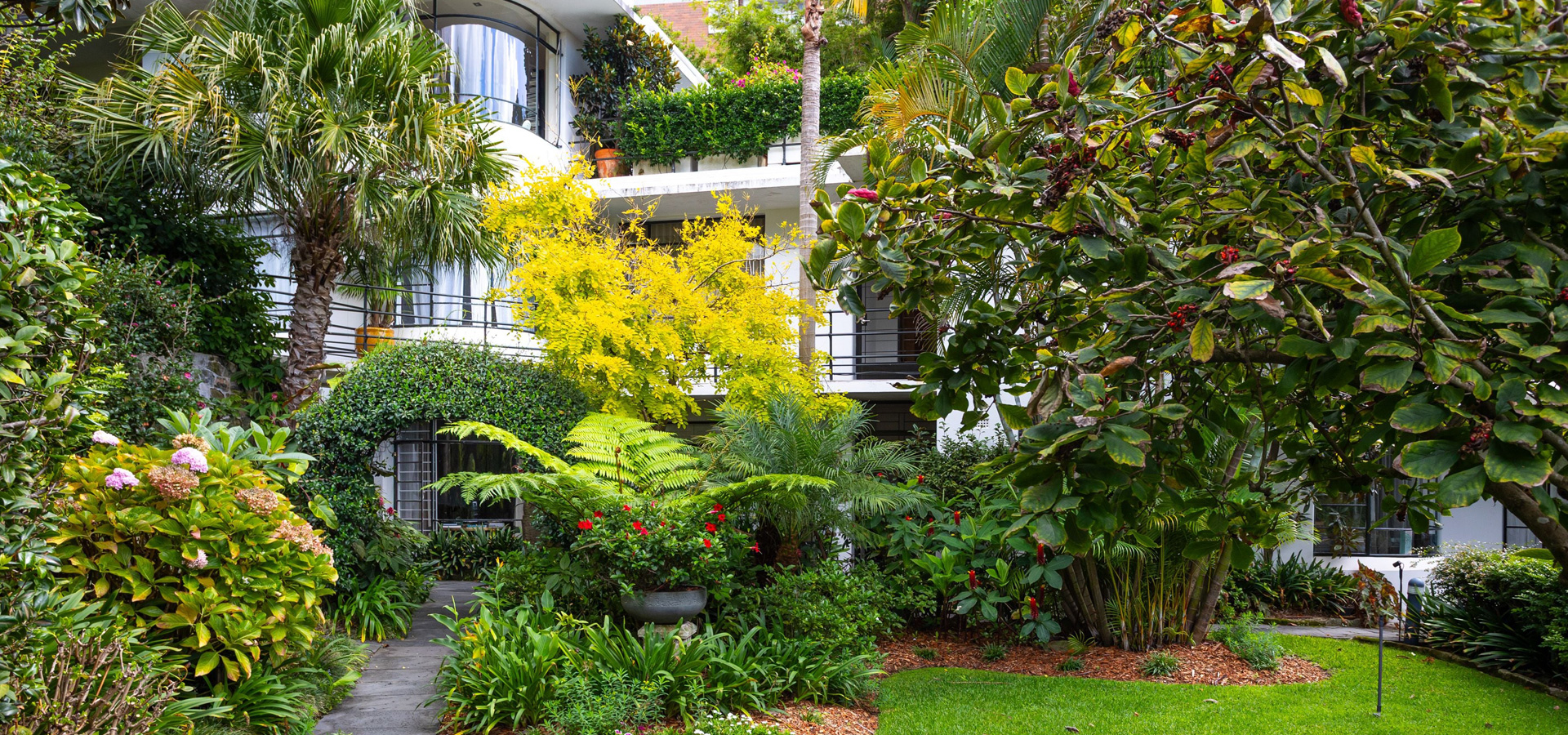
Rows of mature trees help break up hard edges, filter light, create shade and provide visual relief from concrete, brick and traffic – bringing a sense of calm to densely populated neighbourhoods.
But trees also change the way people experience a suburb on foot: something that’s also vital in the walkable suburbs of the inner east.
Shaded streets feel cooler during summer, more comfortable to walk through and often more inviting at a human level than exposed urban streetscapes. In places like Potts Point, that combination of density, greenery and walkability is part of what gives the area its distinctive atmosphere.
There’s also an aesthetic element that’s harder to quantify but immediately recognisable. Mature street trees provide the kind of layered, established character buyers often associate with older European cities – where greenery, architecture and urban life exist together rather than competing with one another.
In that sense, trees don’t just change the look of a street, they also change the way it feels.
What the UTS/City of Sydney research found
The study analysed more than 1,500 property sales across 31 inner-Sydney suburbs and compared them against a database of roughly 50,000 street trees. What it concluded was there was a surprisingly specific “proximity effect”.
Homes located around 10 to 20 metres from a street tree experienced an uplift in value of roughly one per cent. Based on the median sale prices used in the study, that translated to about $30,000 in additional value.
But when trees sat in close proximity to a property – within roughly 10 metres – the effect reversed. In those cases, values fell by close to three per cent on average, or roughly $70,000. That means there is a $100,000 difference between a tree that’s well positioned and a tree that’s too close.
The reasoning behind that shift is relatively simple. At a moderate distance, trees tend to improve the overall feel of a street by creating shade, greenery and visual softness. But when they sit too close to a property, buyers instead begin focusing on potential downsides – things like blocked light, root damage, leaf build-up, ongoing maintenance concerns and obscured facades.
In other words, it’s not simply a case of “trees equal value”. What matters is the more nuanced relationship between the tree, the street and the home itself.
Local streets where trees define the atmosphere
In Sydney’s inner east there are several streets made memorable largely because of their tree canopy.
Victoria Street, Potts Point is one of the most prominent examples. Its rows of mature London Plane trees help soften one of Sydney’s densest urban neighbourhoods, creating a streetscape that simultaneously feels grander, calmer and more established than most surrounding areas.
Nearby, Macleay Street achieves something slightly different. Here, the combination of mature trees, wide footpaths and a variety of architecture – which mixes Georgian remnants, Victorian terraces, interwar Art Deco – gives the street the feeling of prosperous 1930s Sydney somehow still held intact.
In Springfield Avenue and parts of Elizabeth Bay Road mature figs, palms and other trees combine with Art Deco apartment buildings and older sandstone homes to create a streetscape that can feel almost Mediterranean: dense and urban, but still green and shaded.
Even smaller streets like Greenknowe Avenue and parts of Onslow Avenue demonstrate how mature canopy can completely change the experience of a neighbourhood, making them feel quieter, cooler and far more visually layered.
And, moving slightly further afield, parts of Darling Point Road and the roads around St Mark’s Church combine mature canopy trees with harbour glimpses and large established homes to create some of the most visually distinctive streetscapes in the east.
What all these streets have in common is that the trees don’t feel decorative or incidental, but are central to the identity of the neighbourhood itself.
What buyers and sellers should take from this
For buyers, the practical implication of the study is relatively straightforward: if the property you’re looking at is defined by the presence of mature street trees, it’s likely to be in higher demand – and it could be a reason you fell in love with it in the first place. But, if the tree is close to the home, you may have more room to negotiate on price.
For sellers, the research suggests that properties already sitting in well-treed streets have a genuine advantage over other homes that go up for sale – one that doesn’t require any work to realise.
What it does require, however, is knowing how to present in a way that makes the most of your natural asset – whether that’s in the photography, the time of day you schedule open homes or how the property is described online.
Conversely, if a tree is in the “danger zone” (i.e. less than 10m away), it’s worth addressing it directly rather than hoping buyers won’t notice. Acknowledging the canopy while emphasising compensating features (e.g. light from other aspects, outdoor space or ceiling height) is usually more effective than staying silent on the subject.
Finally, for anyone thinking about the longer arc of value: the trees that define streets like Victoria Street and Macleay Street today were planted decades in the past – and sometimes even more than a century ago.
The canopy that makes a neighbourhood feel established takes generations to grow. That’s not an argument against planting – but, if you do, be prepared to wait some time before the tree adds meaningful value to your home.
Want more?
Read more about the trees of Potts Point here. Thinking of buying or selling in 2026? Talk to our team about what’s happening in the market right now.