Few addresses capture Sydney’s evolution quite like The Wharf Terraces at 10 Lincoln Crescent, Woolloomooloo.
Tucked beneath the Art Gallery of New South Wales and situated opposite the Woolloomooloo Finger Wharf, the Wharf Terraces were built in 1998 – just ahead of the Finger Wharf conversion.
The 34 four-bedroom luxury residences flow along the water’s edge, and are coveted for their harbourside location. Residents wake up to the sunrise from their east-facing homes, and have exclusive access to the building’s private Marina.
Today, these four-bedroom apartments attract downsizers and design purists alike. However, the story of this building begins in a very different Woolloomooloo.
A short history of Lincoln Crescent
Lincoln Crescent runs along the waterfront, from the Domain to Bourke Street, near the famous Bells Hotel on the corner of Cowper Wharf Road.
The first mention we could find of Lincoln Crescent dates from 1867, when it featured in a series of advertisements published in the Sydney Morning Herald:
“WOOLLOMOOLOOO BAY. Valuable corner Building Site, Cowper Wharf, with frontages also to door to street and Lincoln Crescent, opposite the Domain.”
The land was owned by O. H. Lewis Esq, an architect in the early colony and was referred to as a “one of the choicest allotments in Woolloomooloo”, suitable for business or residential.
In 1874, Lincoln Crescent was mentioned in the newspapers once again, when Sydney Municipal Council voted that “kerbing and guttering be laid on the east side of Lincoln Crescent, near Woolloomooloo Bay, at a cost of £31”.
Lincoln Crescent’s south end has always had residential homes – many of them grand residences. Newspapers of the 1870s are scattered with households advertising under “Servants Wanted”. One reads:
“Respectable girl as housemaid. Apply Mrs Punch, Lincoln Crescent, Woolloomooloo Bay.”
In 1879, Mrs Ireland of 1 Lincoln Crescent advertised for a “girl to mind children and assist in housework”.
From its very beginning, a Lincoln Crescent address was always considered the ultimate in convenience for a city residence. An 1892 advertisement declares: “BALCONY, upstairs, lofty, well-ventilated ROOM to LET, 10 minutes from G.P.O. 28 Lincoln Crescent, facing Domain, Woolloomooloo, near Bells Hotel”.
That said, proximity to the city didn’t necessarily mean accessibility. Traffic and steepness had made it difficult for horses and, in 1911, a new horse-cargo route was proposed.
Four years later, a 1915 article bemoaned the long time it was taking to enable better access via “The Road” to Woolloomooloo – even after the council commissioned the work to be done and Lincoln Crescent to be widened:
“Out of 14 men on the job, 13 were loafing,” the Lord Mayor noted, on visiting the construction site.
On 23 July 1925, Lincoln Crescent then made the front page of The Daily Telegraph, with the headline “Australia gives the glad hand to America,” in anticipation of the U.S. Navy’s “grey armada,” arriving in Sydney Harbour on battleships. It noted:
“Huge crowds are anticipated in the city. Barricades will be erected along the line of march … two thousand sailors and marines will land at Woolloomooloo Bay, and will march through tho city, via Lincoln Crescent”.
From working dock to luxury address
As an inner-city wharf area, Lincoln Crescent also had its fair share of unpleasantness.
A 1946 expose from The Sun newspaper – timed to coincide with the Lord Mayor’s attempts to have Sydney named a “beautiful city” – awarded Lincoln Crescent joint first prize for sheer dirtiness (it tied with Forbes Street, Darlinghurst).
The Sun described Lincoln Crescent as “a never-ending line of unswept filthy gutter”.
The Northern parts of Lincoln Crescent were dockside, as a 1956 photo of veteran cars being loaded onto ships for the Golden Fleece Melbourne to Ballarat Veteran Car Rally shows.
In 1961, Lincoln Crescent underwent significant changes, as the Cahill Expressway and Domain tunnel were built right next to it.
Photographs from 1967 reveal basic curved storage sheds on the water’s edge, behind a row of retro parked cars on a largely deserted street. In 1970, there was another round of roadworks.
This 1984 photo shows the rustic old seawall looking towards Lincoln Crescent, a decade before luxury apartments took over the waterside.
The Wharf Terraces on Lincoln Crescent today
Today, 10 Lincoln Crescent is home to the Wharf Terraces – one of inner-city Sydney’s most coveted addresses – especially for downsizers. We think much of its appeal comes down to these seven factors:
- Convenience. The Wharf Terraces have an unbeatable location. Directly below the Art Gallery of NSW, steps to the Royal Botanic Gardens, Andrew Boy Charlton Pool, and Opera House, with shopping, dining, transport and the Sydney CBD all just moments away.
- Harbourside living. Views for days and waterfront access with the option for your own mooring – it really doesn’t get any better than this.
- Modern low maintenance lifestyle. With 24/7 security and concierge and top building management, residents don’t have to worry about maintenance. The Wharf Terraces provide residents the ultimate lock-up-and-leave lifestyle.
- That elusive fourth bedroom. Finding a four-bedroom apartment so close to the city is almost impossible – so when the terraces come to the market they’re hotly contested. For instance, when apartment 9 was listed two years ago, realestate.com.au says it received over 250 enquiries in a matter of days.
- Boutique complex. With just 34 apartments, the Wharf Terraces is known for its privacy and also its community-minded focus. Apartments rarely come up for sale here, in fact, Domain has the average tenure of an owner-occupier at almost 15 years.
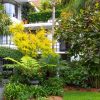
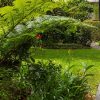
- Resort-style facilities. Immaculate gardens, a spa, sauna, gym and a function/conference room, plus the marina out the front, make this the ultimate in resort living.
A case study in apartment sustainability
The City of Sydney features the Wharf Terraces as a case study in sustainability. The strata committee was the first in Sydney to install solar and battery facilities to power individual apartments – game changing development according to Wattblock.
The building’s famous flat roof already had a green rooftop vibe (it’s home to a public walking and cycling path), so in 2017, residents decided it was perfect for solar. They received a City of Sydney grant the following year to undertake an energy efficiency assessment and solar feasibility study.
A spokesperson for the Wharf Terraces Strata Committee was quoted as saying “owners were keen to continue Wharf Terraces’s progressive and community-minded approach to their home with sustainable projects like solar …and… EV charging infrastructure”.
After much research, a 22kW solar energy system was installed to power common areas, with a battery system that stockpiles energy for electric vehicle charging. Over time, a 78kW east-west facing solar energy system was added, which is shared to power resident’s homes. Upgrading to 34 smart meters and EV charging infrastructure for the carpark followed.
It wasn’t an easy task to retrofit green features into an existing luxury apartment building. However, the decision was justified – not just on environmental grounds but because it also reduced running costs.
And, it may have been great for resale value too. As last year’s Domain Sustainability in Property Report revealed, properties with energy-efficient features sell faster and for more.
10/10 Lincoln Crescent on the market
We’re currently selling apartment 10 in The Wharf Terraces.
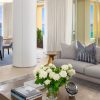
This spacious apartment offers four bedrooms, seamless indoor/outdoor living and expansive spaces right on the waterside. In mid-2019 (just before the pandemic property boom), we sold apartment 14 for $4.9 million.
Apartment 18 sold for $8 million in June this year.
Want more?
If you’re considering buying or selling in Sydney’s East, contact my team for expert guidance.