Some of the oldest and grandest homes in Sydney can’t be bought or sold – they’re heritage listed and owned by government bodies, local councils or preservation-focused non-profits.
As a result, any of us can admire their architectural splendour and beautiful landscaping – and possibly even enjoy a meal, drinks or an event – while discovering their stories and secrets all for ourselves.
This week we tour five iconic, historic homes in Sydney’s east that you too can visit.
1. Elizabeth Bay House
Address: 7 Onslow Ave, Elizabeth Bay NSW 2011
Constructed: 1839
Architect: John Verge
Opening hours: Sundays and Mondays from 10am to 4pm.
Elizabeth Bay House was the home of colonial secretary Alexander Macleay and originally sat on 54 acres, taking up much of the area we now know as Potts Point and Elizabeth Bay.
Architect John Verge designed the residence in the Australian Colonial Regency style. One of the finest homes built during Sydney’s colonial era, construction began in 1835 and was completed in 1839.
Elizabeth Bay House’s history reflects the rise and fall of the Macleay family. Alexander Macleay’s obsession with the estate meant he spared no expense, but the upkeep on the home and its incredible botanical gardens eventually led the family into financial ruin. The house fell out of their hands in the late 19th century, when its grounds were sold off and rooms subdivided into flats. Thankfully, the house was restored to its original grandeur and glory in 1977 by the National Trust as part of an initiative to save Sydney’s historic houses.
Elizabeth Bay House is now owned by Museums of History NSW (a statutory body of the NSW government), which describes it as being “Sydney’s ultimate trophy home” with harbour views, sweeping staircases and a spectacular landscaped gardens that feature a Koi pond.
The residence sits opposite Arthur McElhone Reserve, and is free to the general public on Sundays and Mondays. You can also take a guided tour of Elizabeth Bay House (the next one is scheduled for 26 March at 9am), or visit events in its grand surroundings including music and cultural concerts.
2. Lindesay, Darling Point
Address: 1 Carthona Avenue, Darling Point NSW 2027
Constructed: 1834
Architect: Edward Hallen/Francis Clarke
Opening hours: Tours every Wednesday at 10am and 11am
Owned by the National Trust, Lindesay is notable as both the first house in Darling Point and the first in Australia to be designed in the Gothic Revival style.
Built in 1834, the home was commissioned by long-serving Scottish-born Colonial Treasurer, Campbell Drummond Riddell. Construction began in 1832 – just two years after Riddell assumed office – and took another two years to complete. Riddell originally engaged architect Edward Hallen who drew up the initial plans for the home but he later abandoned the project, allegedly unhappy with its opportunities and his income. He is believed to have been replaced by Francis Clarke who oversaw Lindesay’s construction and became the main influence on its final form.
Decorated in 19th century style with restored Georgian interiors, a circular drive and stunning gardens with harbour views, Lindesay is perfect for weddings (you can rent it for events). And, if you’re not getting married anytime soon, you can still tour Lindesay any Wednesday at 10am or 11am.
3. Bronte House
Address: 470 Bronte Road, Bronte
Constructed: 1845
Architect: William Mortimer Lewis
Opening hours: Next Open, 7-8 March 2026, 10am to 2pm*
Did you know that the suburb of Bronte takes its name from Bronte House: an historic home that sits above Bronte Gully, up the hill from the beach.
Bronte House itself was named after British war hero, Lord Nelson, who was given the title Duke of Bronte (an Italian town) by the King of Sicily after defeating the French at the Battle of the Nile.
In 1836, Colonial Architect William Mortimer Lewis, acquired 42 acres of land at what was then ‘Nelson Bay’ and began building a house. However, he was forced to sell it partly-completed after his finances were hit in the 1843 depression. The buyer was Robert Lowe, an English barrister and later NSW parliamentarian, and his wife Georgiana. The couple intended to use the home as their country residence (though hard to imagine now) and completed it in 1845.
The property changed hands several times before the Ebsworth family acquired it in 1884. They held onto it until 1948 when the house and grounds were sold to Waverley Council.
In 1978, Bronte House was listed on the Australian Heritage Commission Register of the National Estate. In 1981 it was made the subject of a permanent Conservation Order, before being included on the State Heritage Register in 1999.
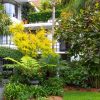
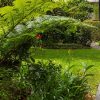
Since 1983, Bronte House has been privately occupied by residents who take out a unique long-term, high-value lease with Waverley Council as part of a custodial agreement to maintain the heritage property. The Gothic-style cottage is still surrounded by two acres of lush sub-tropical gardens.
* Regular open days are scheduled, where you can wander the gardens with the next one on 7-8 March 2026. However, Waverley Council is expected to announce that both the home and grounds will be open to the public year-round from mid-2026.
4. Vaucluse House
Address: Wentworth Road, Vaucluse NSW 2030
Constructed: 1803 – 1839
Architect: William Charles Wentworth (credited)
Opening hours: Wednesday to Sunday, 10am–4pm
Vaucluse House was originally described as a modest cottage on a small farm that was built in 1803 on land purchased by Irish convict Henry Browne Hayes. Hayes had been transported in 1802 for the kidnapping of a wealthy heiress in Cork. Allegedly considered a troublesome character by Governor King, he was encouraged to purchase the land and move “out” of Sydney.
Hayes is believed to have named the property Vaucluse after his admiration for the Italian poet Petrarch’s Fontaine-de-Vaucluse near Avignon, France. However, he didn’t stay in his new home for long – by 1812 he had been pardoned and returned to Ireland.
The estate changed hands several times before it was purchased in 1827 by William Charles Wentworth, an explorer (of Blue Mountains fame), lawyer, author, pastoralist and editor of The Australian.
Wentworth became one of the wealthiest and most powerful figures in colonial New South Wales. Over several decades he added to, rebuilt and remodelled the home with the gardens and grounds of Vaucluse House covering most of the present-day suburb of Vaucluse in the 1830s.
Vaucluse House became Australia’s first official house museum in 1915 and continues to host visitors today on its incredible 11 hectares (28 acres) of formal gardens and secluded park-like grounds. You can see how a (very) wealthy colonial family would have lived, with the kitchen remaining intact, as well as the grand public rooms and bedrooms.
Vaucluse House is at 69A Wentworth Road Vaucluse, and is run by Museums of History and open with free entry Wednesday to Sunday from 10am to 4pm and guided tours on offer Wednesday to Friday at 10am and 2pm.
Fun fact: William Wentworth also owned the land on which heritage-listed Strickland House at 52 Vaucluse Road, sits. The former residence and convalescent home now currently hosts functions, film studio and park with access to stunning Milk Beach.
5. Dunbar House
Address: 9 Marine Parade, Watsons Bay, NSW 2030
Constructed: 1837
Architect: Mortimer Lewis
Opening hours: Restaurant & bar open Wednesday – Sunday
Want to dine in a historic harbourfront mansion? Head to Dunbar House at 9 Marine Parade Watson Bay.
Dunbar House dates back to 1837, and was designed by prominent colonial architect Mortimer Lewis. Originally a private residence known as Zandoliet, it was owned by Colonial Treasurer Pieter Laurentz Campbell (who was married to Barbara Isabella, Alexander McLeay’s daughter). However, from 1854, the property became a hotel and had stints as a zoo, outdoor cinema and school. It then operated as the local council chambers from 1924, before becoming a library.
Dunbar House was renamed in 1950, taking its name from the sailing ship The Dunbar, which was wrecked near Sydney Heads in 1857, resulting in the tragic loss of 121 lives. The incident remains one of Australia’s worst maritime disasters.
The Victorian mansion is now owned by Woollahra Municipal Council who lease it as a restaurant, bar and events venue (known as “Dunbar House by Paloma’s”). You can find out more at their Instagram page.
Want more?
If you’re considering buying or selling in Sydney’s East, contact my team for expert guidance.