Brougham Street in Woolloomooloo runs one way, from Cowper Wharf Road to William Street.
It is parallel to Victoria Street and dates back to colonial Sydney.
Join me on a walk down this fascinating residential street to discover more about its past…
The name: Brougham Lodge
According to the City of Sydney’s History of Sydney Streets, Brougham Street was the location of the residence of Chief Justice Sir James Dowling.
James Dowling was the second Chief Justice of the New South Wales Supreme Court (Dowling and South Dowling Streets are named after him). He started his career in England as a parliamentary reporter and was called to the bar in 1815. He later applied to the Colonial Office for a judicial appointment overseas, arriving in Sydney in 1828.
Dowling was granted eight acres on “Woolloomooloo Hill” where, around 1830, he built “Brougham Lodge”, not far from the busy junction of Darlinghurst Road and Victoria Street.
No one knows who created the original designs, but the early colonial villa was completed by architect John Verge.
Dowling named the property Brougham Lodge after his patron (or financial backer) Lord Henry Brougham, another barrister and prominent abolitionist who rose to become Lord High Chancellor of Great Britain.
A newspaper article from 1913 quotes Dowling’s grandson, Mr James Arthur Dowling, on his reflections of his grandfather’s role in the creation of Brougham Lodge and what we now know as the streets of Potts Point and Darlinghurst:
“He named it after Lord Brougham, through whose influence he obtained his appointment as Puisne Judge. He gave a portion of the land to make Victoria Street, which he named after the late Queen; also another portion to make Duke Street, which was so called in honour of the Royal Family. He also gave a portion to make Dowling Street, which he named after himself, and a portion to make Forbes Street, which he named after Sir Francis Forbes, the then Chief Justice.”
Chief Justice Dowling had brought his wife and six children with him to Sydney and, despite working long hours and earning excellent money for his senior role in the colony, struggled to keep on top of his finances. In 1828 he wrote to Brougham, that ”Without parsimonious economy . . . I cannot keep out of debt . . . even with my frugal habits… I have been obliged to mortgage the little property I have scraped together to enable me to maintain and educate my children.”
Dowling owned Brougham Lodge until he passed away in 1844, aged just 56. In 1845, some of the Dowling land was given over to the construction of New South Head Road. In 1846, more of the estate was subdivided, but eight acres remained with the original house on Victoria Street. Brougham Lodge was then rented for a time, before being used as a boys’ school run by Mr Horniman.
In 1882, subdivision of the remaining estate offered “22 splendid building sites”. Brougham Lodge was sold to developers for £7,000 and demolished shortly after, replaced with Brougham Terrace. It was eventually sub-divided and sold to build the Holiday Inn, at 203 Victoria Street.
Life on Brougham Street
While Dowling’s house, Brougham Lodge, fronted Victoria Street, its namesake, Brougham Street, was down the cliff on the Woolloomooloo side. Broughton Street appears in subdivision maps believed to be as early as 1842.
We can get a small taste of life on Brougham Street in the 1800s from some historical documents. This circa 1846 watercolour, believed to be by artist Frederick Garling, shows a street believed to be Brougham Street. This 1848 print shows Brougham Lodge with its circular driveway.
This photograph from 1875 shows a “residence” on the cliff side of Brougham Street.
Landmarks on Brougham Street
Today, Brougham Street contains an eclectic mix of buildings from different eras, but many of them date back to the 1800s. Some of them actually have street addresses on McElhone or Victoria Streets.
Here are some of the landmarks you’ll see on Brougham Street in 2025.
The Butler, McElhone and Hordern Stairs
One of the best-known landmarks on Brougham Street is the Butler Stairs, connecting Brougham Street to Victoria Street. Brougham Street is also home to the McElhone Stairs and Hordern Stairs. Great for getting the heart rate up.
Numbers 52–88 Broughton Street
Some of the original Victorian terraces from late 1800s and early 1900s subdivisions remain, with a range of styles that give the street its character charm.
Number 35–85 Brougham Street
This social housing townhouse complex was built on land that was hotly contested in the late 1960s and early 1970s as part of the green bans. Historian, Naomi Parry argues in her report on the site:
“The Woolloomooloo Residents Action Group and the Builders’ Labourers’ Federation won over the Whitlam Government, who funded the NSW Housing Commission to work with the community to renovate existing housing in Woolloomooloo and replace lost housing with buildings that were sympathetic in scale to the surrounding terraces. The townhouses at 39–85 Brougham Street were one of these infill projects, built in 1980–1981 on the abandoned WH Lober’s Garage, the International Radio Company, which had displaced housing in the 1940s. The Brougham and McElhone Street townhouses mark the return of Woolloomooloo to community and innovation in social housing.”
Number 161 Brougham Street: The IDA Complex & Calidad
In 2018, 30 designer apartments were created as part of the IDA Complex, with what was a large 1820s convict-hewn, sandstone wall on its western side. The complex incorporates the heritage listed Calidad building, a 1974 commercial building designed by prominent “Sydney School” architect, Ian Mackay.
143 Brougham Street: Currently on the market
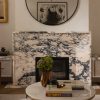
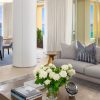
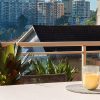
We currently have a stunning terrace at 143 Brougham Street on the market. Going to auction on 6 March, this property offers up to five bedrooms and an unbeatable location on the city fringe. This beautifully renovated c1880s terrace spans four levels and showcases magnificent views of the CBD skyline and Harbour Bridge and Opera House.
Want more?
Contact us if you’re buying or selling in Woolloomooloo, Potts Point and Elizabeth Bay.